
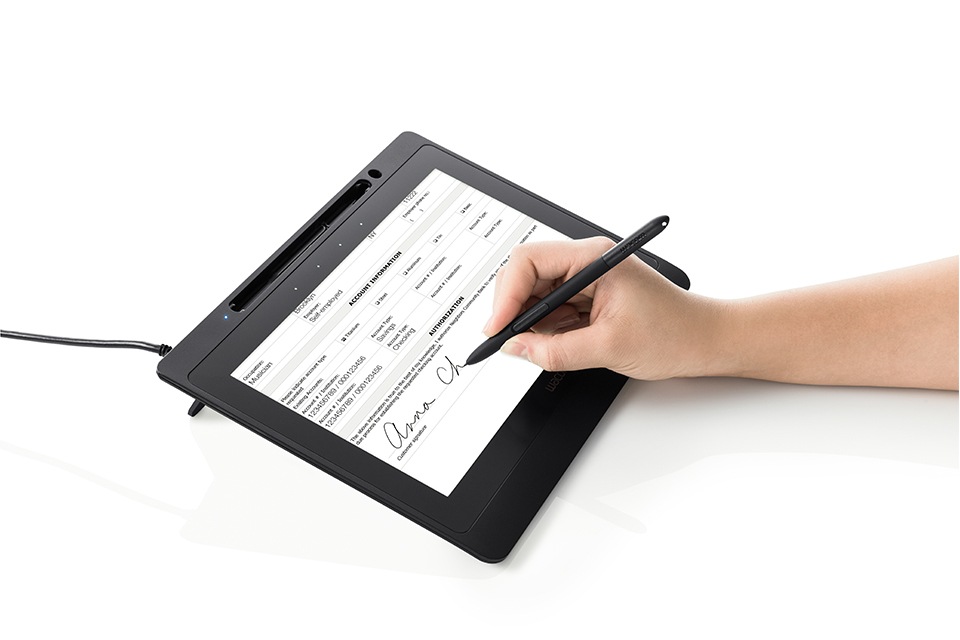
Electronic Signature tablets for Medical records
Registration and Approval
electronic signature tablets for medical records Paperless Patient Registration
It is used for the purpose of signing directly on the screen by examining the forms that need to be approved in the patient admission area and in the subsequent treatment stages. Thus, paper and document circulation is minimized and the archive system is accelerated.
Medical Record System
It is quick and easy to operate using pen to control the cursor within the electronic medical record software. Your eye naturally directs the pen you have to the point where you want to operate on the screen, with this human feature, using a pen becomes much faster and error-free than using a mouse. Using and touching the pen is an intuitive operation,
With Wacom pen, you can easily process medical images, forms and take notes with handwriting. In addition, it is an effective method to explain the operations to be done on a screen by drawing or writing.
Patient-Doctor Relationship
In order to provide the highest level of patient care, leading physicians are progressing visually by writing the treatment plan and preferences in patient files and drawing diagrams of the relevant region. In this way, the patient was seeing what to do and the treatment plan in his file.
With the introduction of electronic medical records working with a keyboard and mouse, this visual method of communicating with many patients began to disappear. Changing this situation is possible with Wacom. By adding software to the Wacom pen and screen, which provides drawing tools, doctors can still use pen and digital ink to explain medical situations and procedures, with visual illustrations and handwritten notes.
With Wacom, you can make business meetings quickly and efficiently as you draw on traditional paper directly on the screen, and make your meetings dynamic and interactive.
Together with the use of pen and screen, Wacom offers higher quality for effective use of doctor time and patient communication.
Electronic signature tablets let UAE hospitals and clinics capture legally valid, biometric patient signatures for consent forms, intake documents, and prescriptions — directly compliant with DHA, DOH, and MOHAP electronic consent standards, and reducing patient intake time while integrating with NABIDH, Malaffi, and Riyati health information exchanges.
Why UAE Healthcare Providers Are Moving Patient Consent to Signature Tablets
Patient consent, intake forms, and treatment authorizations generate some of the highest-volume paperwork in any healthcare facility. In the UAE, this workflow now sits at the intersection of three regulatory frameworks: DHA and DOH clinical consent standards, the federal ICT Health Law, and the Personal Data Protection Law — all of which explicitly recognize electronic and biometric consent methods, provided the facility can demonstrate proper capture, integrity, and retention.
Electronic signature tablets give clinics and hospitals a single point of capture that satisfies all three: a legally defensible signature, integration with the electronic health record, and an audit trail that supports the 25-year retention period the UAE’s health data law requires.
Is Electronic Signature Legally Valid for Patient Consent in the UAE?
Yes. DHA’s Guidelines for Patient Consent explicitly define an electronic signature as letters, numbers, symbols, voice, or a processing system used to indicate consent, and DHA’s telehealth standard confirms that consent may be obtained through secure electronic systems — including biometric methods — for both in-person and remote encounters.
This runs alongside the general legal recognition of electronic signatures under Federal Decree-Law No. 46 of 2021 on Electronic Transactions and Trust Services. For clinical settings specifically, the additional requirement is that the signature capture and storage process must meet the confidentiality, integrity, and access-control standards set out in Federal Law No. 2 of 2019 on the use of ICT in health fields and Federal Law No. 45 of 2021 on personal data protection, since health information is classified as sensitive personal data.
Key compliance point: consent documentation must still capture the full name and signature of the treating healthcare professional and, where applicable, a witness or interpreter — a signature pad or display simply replaces the pen-and-paper step, not the clinical consent process itself.
What UAE Health Data Rules Mean for Signature Capture Hardware
| Requirement | Source | How signature tablets help meet it |
| Data encrypted in transit and at rest | DHA Telehealth Standard (ST-14) | Hardware-level AES/RSA encryption during capture |
| No unauthorized data retained on capture device | UAE ICT Health Law / PDP Law | Wacom devices store no signature data locally |
| Health data hosted on UAE-based servers | Federal Law No. 2 of 2019 | Signature files route directly into UAE-hosted EHR/DMS |
| Minimum 25-year retention of health records | Federal Law No. 2 of 2019 | Digital signature files integrate into long-term digital archive |
| Explicit, documented patient consent | PDP Law / DHA Consent Guidelines | Biometric capture creates a verifiable, timestamped consent record |
Where Signature Tablets Fit Into the Patient Journey
1. Front-Desk Registration and Intake
Compact signature pads at reception capture acknowledgment of privacy notices, insurance terms, and general registration forms in seconds, replacing stacks of printed intake packs.
2. Informed Consent for Procedures and Treatment
Because informed consent forms typically run to a full page or more of risk disclosures, a signature display — which shows the full document on-screen — is generally the better fit than a compact pad, so the patient can read the content directly on the device before signing.
3. Prescription and Medication Authorization
Signature capture at the point of prescription hand-off creates a clear record of receipt, useful for controlled-substance tracking and pharmacy audit requirements.
4. Telehealth and Remote Consent
DHA’s telehealth standard requires documented consent before a remote consultation begins. Facilities offering in-clinic telehealth booths or kiosks can pair a signature display with the consultation screen so consent is captured at the same touchpoint as the visit.
5. Discharge and Follow-Up Documentation
Discharge summaries, home-care instructions, and follow-up scheduling acknowledgments can be signed at bedside using a portable signature pad, reducing delays at discharge.
Choosing the Right Device for a Clinical Environment
- High-volume reception desks: compact signature pad for quick acknowledgment-only forms.
- Consultation and procedure rooms: signature display so patients read full consent language before signing.
- Bedside or mobile use: a lightweight, cable-light signature pad that clinical staff can bring to the patient.
- Infection-control considerations: choose devices with sealed, wipeable surfaces and confirm cleaning protocols compatible with the display glass.
For a full breakdown of device categories, see our guide to electronic signature pads and displays.
Integration With NABIDH, Malaffi, and Riyati
Dubai’s NABIDH, Abu Dhabi’s Malaffi, and MOHAP’s Riyati platforms are the health information exchanges that unify patient records across facilities. Signature capture hardware that integrates through a documented SDK or PDF-signing workflow allows the captured consent record to flow directly into the facility’s electronic medical record system and, from there, into the relevant health information exchange — avoiding a manual scan-and-upload step that would otherwise break the digital chain of custody for the document.
Reducing Administrative Burden and Patient Wait Times
Manual intake paperwork is one of the most commonly cited bottlenecks in UAE clinic operations, particularly during peak hours. Moving high-volume, low-risk forms (registration, privacy acknowledgment, general terms) to signature pads while reserving signature displays for substantive consent documents lets facilities cut paperwork-related wait time without compromising the depth of review required for clinical consent.
Pros and Cons for Healthcare Deployments
Pros: faster intake, DHA/DOH-aligned electronic consent capture, stronger audit trail for medico-legal disputes, direct EHR integration, reduced physical archive burden.
Cons: upfront hardware cost across multiple departments, staff training on device placement per document type, and the clinical consent conversation itself must still happen — hardware only replaces the paper step.
Frequently Asked Questions
Can UAE hospitals legally use electronic signatures for patient consent?
Yes. DHA’s Guidelines for Patient Consent explicitly recognize electronic signatures, and the Telehealth Standard confirms that secure electronic and biometric methods are acceptable for documenting consent, alongside general recognition under the UAE’s electronic transactions law.
Do electronic consent forms need to be stored on UAE-based servers?
Yes. Federal Law No. 2 of 2019 on the use of ICT in health fields generally requires health data, including signed consent records, to be stored on servers located inside the UAE, with limited exceptions requiring MOHAP authorization.
How long must UAE healthcare facilities retain signed consent records?
Federal Law No. 2 of 2019 sets a minimum retention period of 25 years from the date of the last health procedure concerning the individual, which digital signature and document archiving systems must support.
What is the difference between a signature pad and a signature display for patient consent?
A signature pad captures a signature on a small dedicated screen while the document displays elsewhere, suited to quick acknowledgment forms. A signature display shows the full consent document on the device itself, which is generally preferred for substantive informed consent where the patient should read the content immediately before signing.
Does a signature pad replace the informed consent conversation with the physician?
No. DHA guidelines require the treating healthcare professional to disclose risks, alternatives, and answer questions as part of informed consent. The signature tablet only replaces the paper-based capture of that consent, not the clinical conversation itself.
Can electronic signature devices integrate with NABIDH, Malaffi, or Riyati?
Yes, when the signature capture software routes signed documents into the facility’s electronic health record system, which in turn feeds the relevant health information exchange (NABIDH in Dubai, Malaffi in Abu Dhabi, Riyati for MOHAP facilities).
Is patient health data captured on a signature pad stored on the device?
No. Signature pads and displays are designed not to retain user data locally; captured signature data is transmitted directly to the connected system, reducing risk if a device is lost or damaged.
What consent requirements apply to telehealth in the UAE?
DHA’s Telehealth Standard requires documented consent to be captured through secure electronic means before a remote consultation begins, and facilities must encrypt data in transit and at rest and hold recognized security certification.
Do electronic signatures work for minors or incompetent patients in UAE healthcare settings?
Consent for minors or legally incompetent patients must be obtained from a legal guardian or substitute consent giver as defined under UAE law; the electronic signature capture method applies to whoever is legally authorized to provide consent, not the patient directly in those cases.
How much does deploying signature tablets across a hospital typically cost?
Cost depends on the mix of compact pads versus full signature displays and the number of departments covered. Request a tailored quote based on your facility’s registration volume, consent-form complexity, and existing EHR integration requirements.
Are Wacom signature devices suitable for infection-control environments?
Wacom’s signing surfaces use scratch-resistant tempered glass that supports standard wipeable cleaning protocols; facilities should confirm specific disinfectant compatibility with their infection-control team before large-scale clinical deployment.
What happens if a signed electronic consent form is challenged in a medico-legal dispute?
Biometric signature capture — pressure, stroke speed, and timing data — combined with a documented audit trail strengthens the evidentiary position compared to a scanned or typed signature, though enforceability still depends on meeting the identity-verification and integrity requirements under UAE law.
Conclusion
Electronic signature tablets have moved from a convenience upgrade to a compliance-aligned necessity for UAE healthcare providers managing DHA, DOH, and MOHAP consent requirements alongside the federal health data and personal data protection laws. The right approach pairs compact signature pads for high-volume, low-risk intake forms with full signature displays for substantive informed consent — all routed into your EHR and the relevant health information exchange.
For hospitals, clinics, and diagnostic centers assessing where to start, front-desk registration and informed-consent-for-procedures workflows typically deliver the fastest, most measurable reduction in patient wait times.
Ready to map the right signature hardware to your clinic’s registration desks, consultation rooms, and EHR system? Contact wacomme.ae, Wacom’s authorized healthcare technology partner in the UAE, for a tailored assessment.